.svg)
Building a compelling UX design portfolio is challenging, particularly if you’re an emerging designer starting to showcase your work and trying to stand out in an extremely competitive attention economy. Luckily, it isn’t an impossible task, especially with the help of modern AI tools.
New AI platforms can now help you avoid the "blank page" paralysis and let you focus on what truly matters: showcasing your talent in the best possible way to get recruiters' and stakeholders' attention. As a UX designer, your portfolio is arguably more important than your CV. About 90% of people responsible for hiring say it’s crucial when they evaluate your profile for job applications.
But don’t panic.
In this practical guide, you’ll get a clear understanding of what a UX design portfolio is, what its ideal structure looks like today, what hiring managers are currently looking for, a few UX portfolio examples, and tips on how to use AI tools to create a winning UX design portfolio fast.
What Is a UX Design Portfolio?
A UX design portfolio is a curated collection of projects that showcase your approach to user experience design. Unlike other design portfolios, the examples you include for this type of portfolio focus on user-centered work and emphasize process over visuals.
For many designers, a portfolio is one of the most important assets they'll develop for their professional careers. Not only because it becomes a tool that will help you land the job you want, but also because it forces you to define who you are and who you want to become as a UX designer.
A strong portfolio should include proof of thinking, demonstrate your design and user research methods, tell a clear story for each element, and show how you collaborate and make decisions.
The ideal UX portfolio structure should include:
- Intro/homepage: A clear intro, selected case studies, and curated projects or areas of specialization.
- 3 to 5 case studies: Feature your best work or the work you are most interested in showing recruiters. Include your research methodology, prototypes, testing approach, and outcomes. Including impact metrics makes a strong impression. Can you point to improved product usability or higher user satisfaction as a result of your work? If so, include it!
- About page: A section where you share more about yourself and give a glimpse of your personality, design approach, the tools you use, and your collaboration style.
The format may vary, but most UX designers feature their work on their own professional websites. This gives you full control over the visual elements, structure, and information so your portfolio reflects your style.
The errors or common practices you can avoid:
- Too much text: Remember, you only have a few seconds to stand out.
- Showing only the final UI: As a UX designer, it’s important to show your process, not just the final interface.
- Too many projects: Choose the ones that best showcase your talent and align with the kind of work you are looking for.
- Weak storytelling or generic case studies: Storytelling is crucial for capturing the reader’s attention. Your case studies should have a hook, a strong header and subheading, a short description, and a section where visitors can learn more if they’re interested.
- Focusing on graphic design projects: Avoid focusing on unrelated design work, like a logo design, that won’t show your skills as a UX designer or demonstrate the UX principles behind your work. It’s fine to showcase some design projects, but don’t make them your main focus.
What Hiring Managers Actually Want
If you want to find a UX position that excites you and that you would like to keep long-term, don’t forget what recruiters and stakeholders are looking for. Sometimes, especially with your own work, you assume certain things are obvious when they’re not.
The best portfolio for the role you want is one tailored to that position and aligned with the company's needs. Here’s what recruiters typically want to see in a UX portfolio:
- Clear and concise: Each case study should quickly explain the project, your role, the process, and the outcome. These are the pillars of a strong case study. Keep everything simple and easy to follow, and make sure your visuals and navigation support that clarity. Avoid overwhelming with too much information, busy design, or endless scrolling.
- Process over polish: Good aesthetics matter, but other designers are interested in how you think, not just the final screen. They want to see evidence of user research, how you gathered insights, and artifacts such as personas, user stories, or user feedback.
- Business impact and metrics: People want to see results. How did your work improve conversion rates or reduce task time? What kind of user feedback did you receive? Hiring managers want to understand the value you can bring to the organization.
- Storytelling: It’s not just about beautiful visuals. Consider a narrative arc for your case studies that includes a problem you decided to solve, the research you did, the decisions you made, and the outcome.
3 UX Design Portfolio Examples
If you’re looking for inspiration for your professional website, here are a few examples from leaders in the industry and the key design takeaways you can apply to your own portfolio:
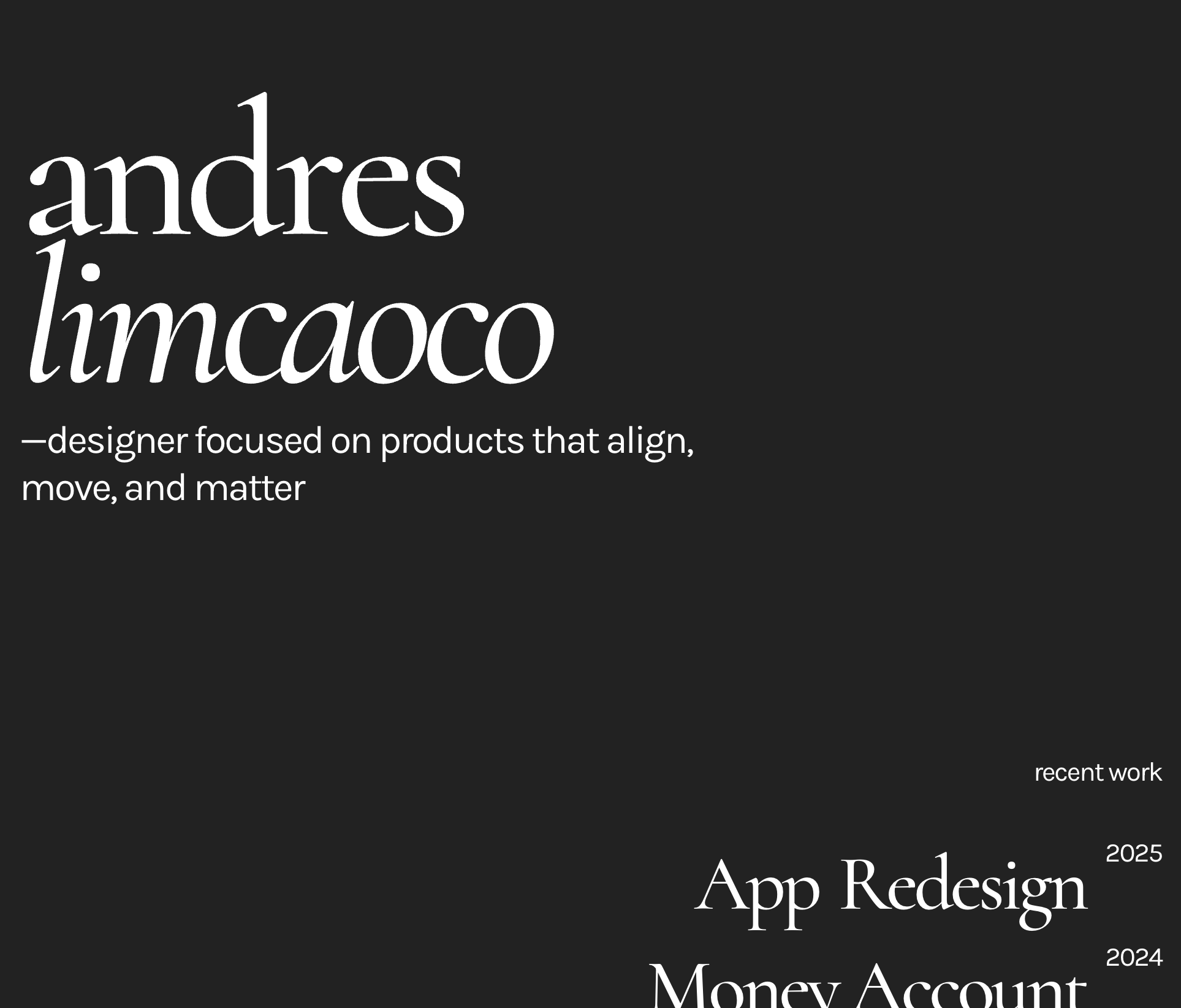
Andres Limcaoco | Product Designer
 https://andreslimcaoco.com/
This minimalist portfolio features all the main elements and emphasizes clarity and focus. In the hero section, Andres Limcaoco presents a personal statement followed by a list of featured case studies and a brief “About” section at the end. Each project is easy to explore after clicking on its title. Limcaoco includes an image, a short description of each project, and key metrics showing the impact of his work.
Overall, this professional website focuses on clarity and readability, which makes the work easy for recruiters or hiring managers to evaluate.
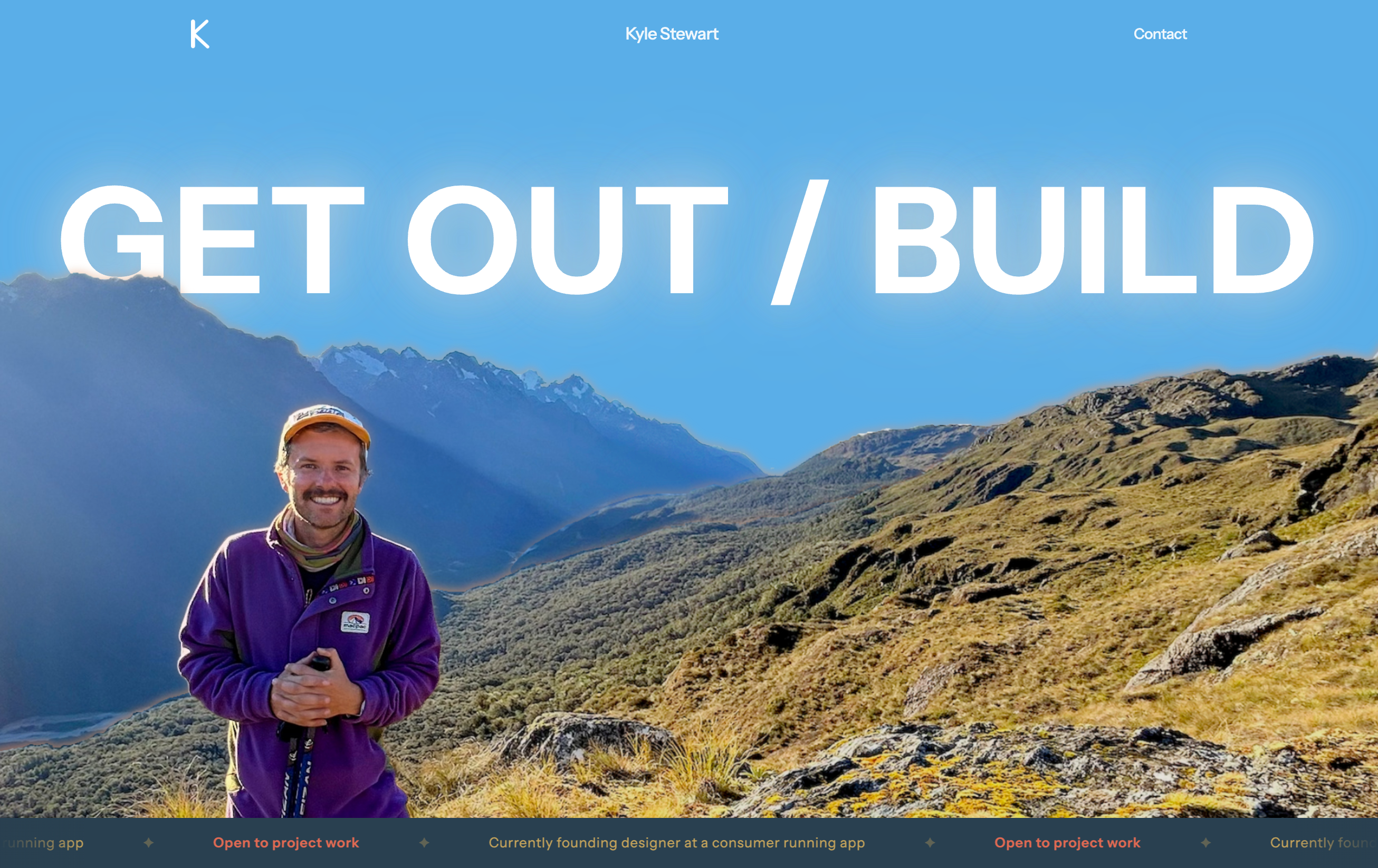
Kyle Stewart | Content Designer
 https://kstew.co/
Kyle Stewart created an attractive and colorful portfolio that clearly reflects his personality and style. The website has a visually engaging approach, including four well-presented case studies with images, metrics, and insights into the design process. Each project highlights the impact of his work, as well as key lessons learned for both the business and his personal growth.
This portfolio offers a clean and direct structure. Recruiters can easily understand his expertise and the business value he brings.
Use AI Tools to Level Up Your Portfolio
Designing an outstanding portfolio may seem long, complex, and exhausting, but it doesn’t have to be. It’s 2026, and you don’t have to start from scratch or spend hours designing pixel-by-pixel.
With new AI tools like Magic Patterns, you can build your winning UX design portfolio in minutes. Now that you understand the key design elements you need, you can write a clear prompt with the context of what you want, include references to your work, and let the AI-native platform help you generate the structure and layout.
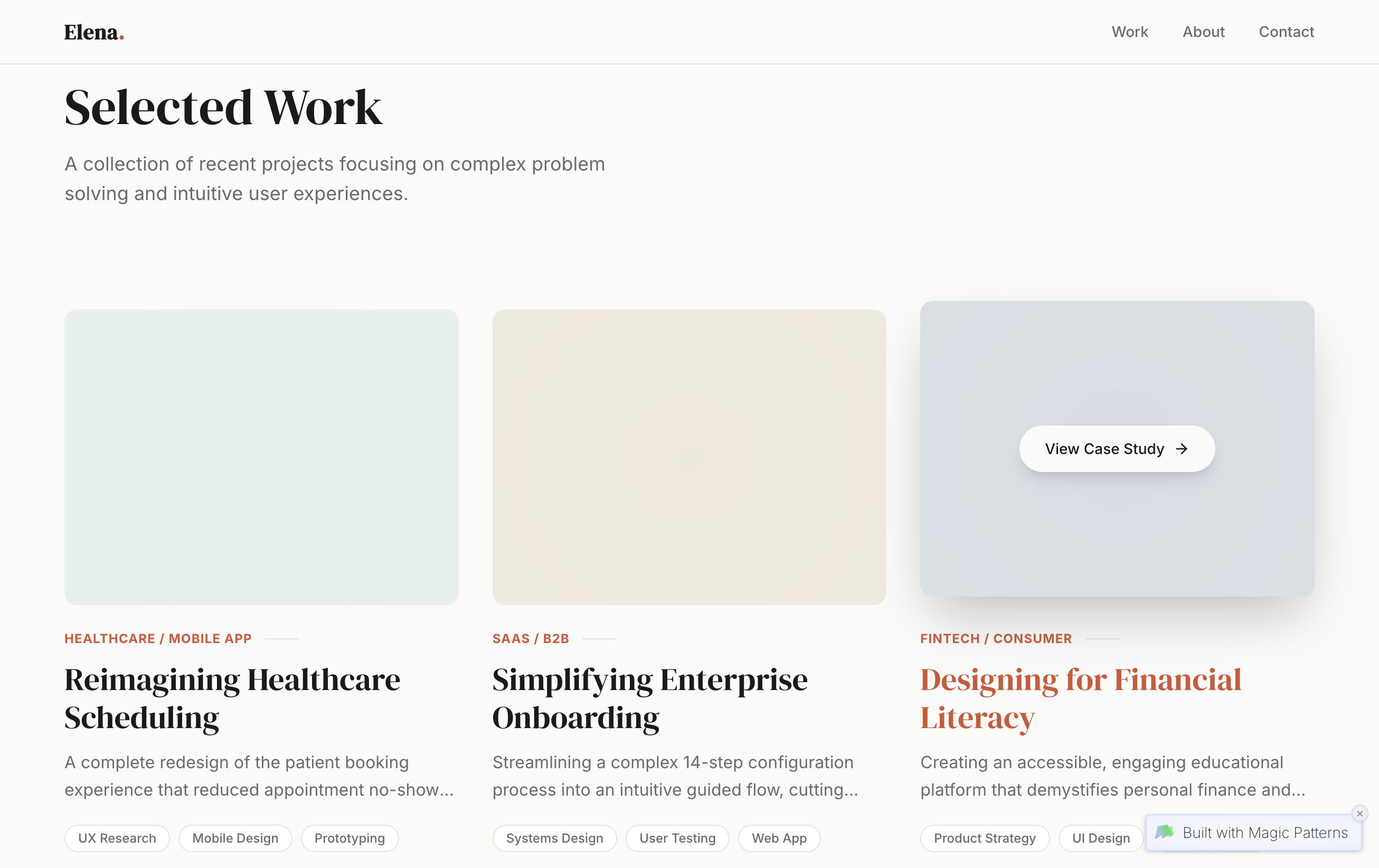 https://project-designer-portfolio-website-293.magicpatterns.app
FAQs
How many projects should a UX design portfolio have?
You should always opt for quality over quantity. Most UX portfolios include 3 to 5 strong case studies. This is usually enough to show your range without overwhelming recruiters. Remember to choose projects that clearly demonstrate your process, decision-making, and the impact of your work.
What makes a UX portfolio stand out in 2026?
A UX portfolio stands out when it clearly shows how you think, not just what you designed. Recruiters want to quickly understand the problem you solved, your role in the project, the process you followed, and the results you achieved. The use of AI tools can also help showcase your adoption of new technologies.
Should you tailor your UX portfolio for each job application?
Yes, when possible. The strongest portfolios are aligned with the role and company you’re applying to. This is another scenario in which AI tools like Magic Patterns become great allies. You can just highlight specific case studies, adjust descriptions, reorder projects, or even rebuild your entire portfolio in just a few minutes.
Build the best version of your product.